Are You Adding Unnecessary Weight to Your Terrace Slab When You Install a Rooftop Solar Plant?
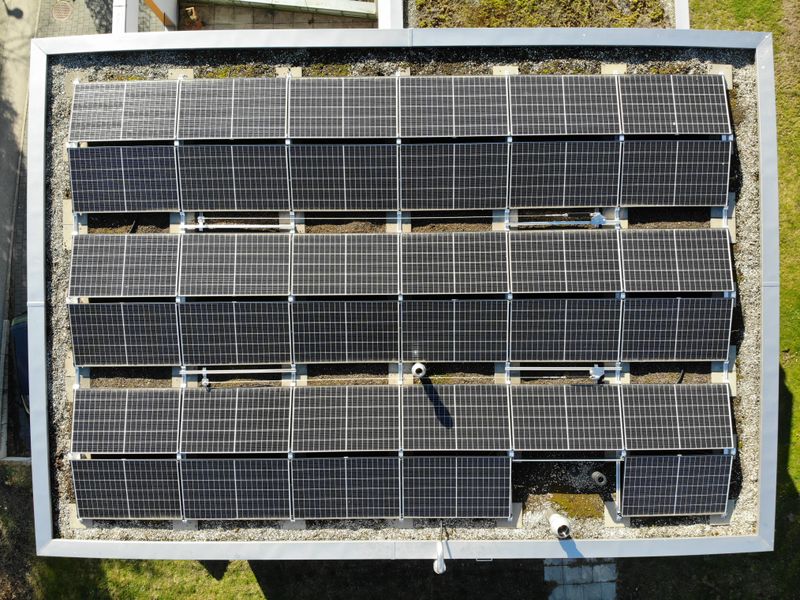
Why heavy steel I-beam mounting structures are a red flag for housing societies — and how factory-galvanised, weld-free designs protect your terrace slab for 25 years.
Introduction
When a housing society evaluates proposals for a rooftop solar panel installation, a common sales tactic among installers is to equate weight with strength. One might encounter quotes which include the use of heavy steel I-Beams.
And to a committee board, it does sound durable — but here is why it is a massive red flag.
Adding Dead Weight to the Terrace Slab for the Next 25 Years
Every concrete slab is designed to withstand a certain amount of weight.
When an installer introduces steel I-Beams under the guise of extra strength, they have a tremendous effect on the structure of your building. The extra weight strains the slab over a long period of time.
Can the Structure Stay Rust-Free for 25 Years?
Installers usually weld heavy mild steel frames together directly on top of your roof. On-site welding destroys protective coatings, burning them away at the joint connections and creating immediate rust points that weaken the framework during every monsoon, especially in humid areas.
A far better way is to use factory-fabricated, hot-dip galvanised (HDG) steel structures. This industrial process completely coats the steel in a thick zinc layer compliant with strict IS 2629, IS 2633, and IS 4759 engineering standards.
The entire system arrives at your building ready for a completely weld-free nut-and-bolt assembly. Because a welding torch never touches the steel on your roof, the protective rust barrier remains 100% intact from day one.
To ensure a true 25-year lifespan, every single connection point must eliminate parts that can corrode. Using premium, highly corrosion-resistant nuts, bolts, and clamps ensures that your structural fasteners stay as clean and secure as the main galvanised framework.
The Missing Link: Demanding Engineering Proof
Do not take an installer's word that a heavy structure is safe. To protect your housing society, you must insist on seeing a STAAD.Pro report and a formal structural stability certification issued by a licensed structural engineer.
This software analysis verifies that an optimised, lighter structure is engineered correctly to withstand maximum local wind loads without adding dangerous, uncertified dead weight to your roof slab.
The Bottom Line
Do not buy into the myth of the heavy structure. Protect your society by demanding an optimised steel design that:
- Prevents roof slab strain
- Complies with official IS standards
- Uses a factory-fabricated weld-free assembly
- Carries a certified stability report
Partner with Koku Solar
Protect the structural integrity of your building with engineering that puts safety first.
Contact Koku Solar today to schedule a complimentary solar assessment!